

Cannabis Executive Attempts To Manufacture Criminal Record, Immediately Undermined By Own Flower
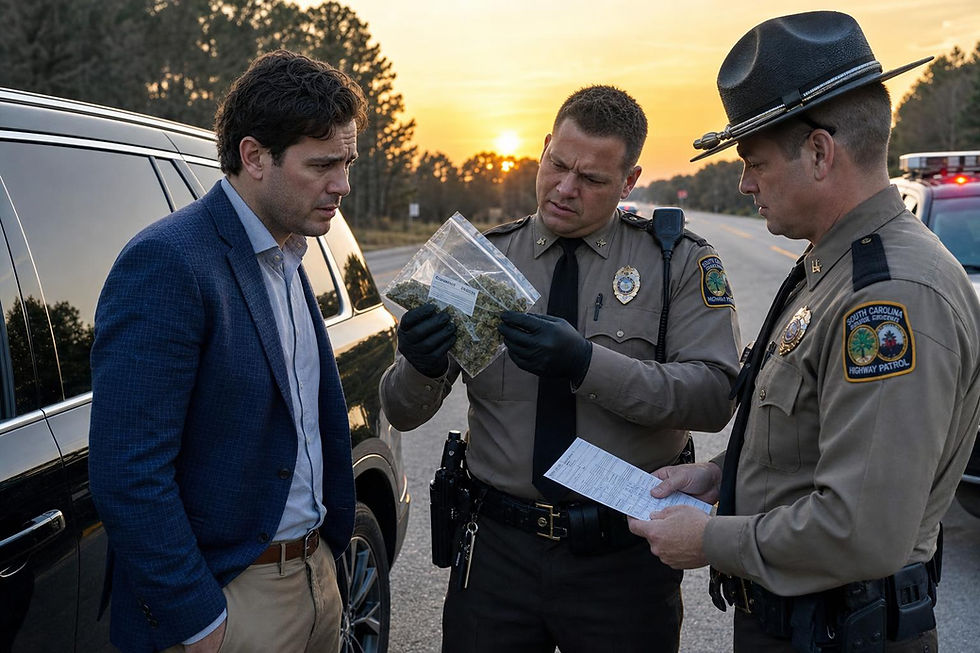
CEO's Alleged Social Equity Strategy Collapses After Police Determine Product Does Not Meet Minimum Standards For Concern
TALLAHASSEE — A cannabis executive's ambitious plan to secure future social equity eligibility reportedly collapsed this week after law enforcement officers declined to issue a possession charge, citing concerns that the seized cannabis "did not appear capable of producing meaningful intoxication."
According to investigators, the CEO of a multi-state cannabis company allegedly traveled into a state where cannabis remains illegal carrying several grams of flower produced by his own company.
Authorities believe the executive's objective was simple:
Get arrested.
Receive a possession charge.
Wait for eventual legalization.
Qualify for social equity licensing opportunities as someone personally impacted by cannabis prohibition.
Industry analysts immediately described the strategy as "the most cannabis executive thing ever attempted."
Unfortunately for the CEO, the plan encountered an unexpected obstacle.
The product.
"Sir, We Can't In Good Conscience Charge You With This"
According to a police report obtained by Boof du Jour, the executive allegedly made little effort to conceal the cannabis during a routine traffic stop.
Witnesses claim he repeatedly referenced criminal justice reform, future licensing frameworks, and "long-term strategic positioning" before eventually informing officers exactly where the flower was located.
One officer reportedly described the interaction as:
"He seemed weirdly excited."
After discovering the cannabis, authorities initiated standard evidence procedures.
What happened next reportedly derailed the entire operation.
The seized flower was allegedly transferred to evidence technicians for documentation and testing.
Several hours later, officers returned.
With the weed.
"We're giving this back," one officer reportedly told the executive.
"Giving it back?"
"Yes."
"I was trying to get arrested."
"We understand."
"So arrest me."
"We don't really feel comfortable doing that."
Evidence Technicians Issue Product Feedback Instead Of Charges
Sources familiar with the investigation claim evidence personnel spent significantly more time discussing cultivation practices than criminal enforcement.
One technician reportedly described the flower as:
"Legally speaking, we're not sure what this is. Agriculturally speaking, we'd recommend a longer cure."
Another allegedly noted:
"It smells like someone explained weed to a tomato."
According to internal reports, laboratory personnel became increasingly concerned after discovering the cannabis produced less excitement than a municipal zoning meeting.
One examiner reportedly spent twenty minutes searching for terpenes before concluding they may have already left.
The executive continued requesting charges.
The state continued providing product notes.
At one point, authorities allegedly returned the evidence bag with handwritten recommendations attached.
Among them:
Consider different drying procedures
Review cultivation SOPs
Stop harvesting early
Have cultivation director smoke own product
The executive later described the encounter as "extremely frustrating."
Social Equity Program Threatened By Quality Control
The incident has reignited discussion surrounding social equity programs and the lengths cannabis operators may be willing to travel in pursuit of future licenses.
For years, social equity initiatives have aimed to provide opportunities to individuals genuinely impacted by cannabis criminalization.
Cannabis executives, meanwhile, have spent the same period asking increasingly creative questions about what technically qualifies as "impacted."
Industry observers say the alleged scheme represents the logical conclusion of a market where operators view literally everything as a licensing strategy.
One consultant familiar with the situation explained:
"Cannabis executives have already turned compliance into a business model, lobbying into a business model, and bankruptcy into a business model. It was only a matter of time before someone tried turning arrest into a business model."
Strong point.
Police Continue Refusing To Treat Product As Serious Threat
As news of the incident spread, additional law enforcement agencies reportedly reviewed testing results from the seized material.
Several departments reached similar conclusions.
One officer allegedly described the cannabis as: "More of a suggestion than a controlled substance."
Another report classified the flower as: "Possession-adjacent."
Authorities maintain their decision had nothing to do with politics, cannabis reform, or future licensing considerations.
Instead, they cited concerns that prosecuting the case could unintentionally be interpreted as an endorsement of product quality.
"We have standards," said one official.
The department later confirmed this was the first time in state history officers returned cannabis alongside cultivation advice.
Industry Leaders Rally Around Executive
Following the failed arrest, numerous cannabis executives reportedly voiced support for the CEO.
Several described the outcome as unfair.
Others expressed concern that similar incidents could discourage innovative licensing strategies throughout the industry.
One MSO executive called the situation: "A direct attack on entrepreneurship."
Another argued: "If operators can no longer manufacture criminal records for future business opportunities, where does innovation go from here?"
A third executive reportedly paused mid-interview after realizing he was accidentally defending securities fraud logic.
Authorities Suggest Alternative Approach
Following the incident, law enforcement officials offered what they described as a simpler path forward.
Rather than pursuing elaborate schemes involving future social equity eligibility, staged possession charges, and interstate transport of underwhelming cannabis, authorities suggested executives consider focusing on product quality.
The recommendation was immediately rejected.
Sources say the executive has already begun exploring several alternative opportunities, including:
strategic misdemeanor development
proactive regulatory hardship generation
preemptive class-action participation
and a new consulting service called Authentic Adversity Partners
The company expects to launch the service sometime next quarter.
"The Weed Was Ultimately The Victim"
At press time, authorities confirmed no charges had been filed.
The cannabis was returned.
The executive was released.
And the flower remains the only party involved that suffered lasting damage.


Comments