

Federal Government Begins Prosecuting Cannabis Seeds for Crimes They May Commit as Adults

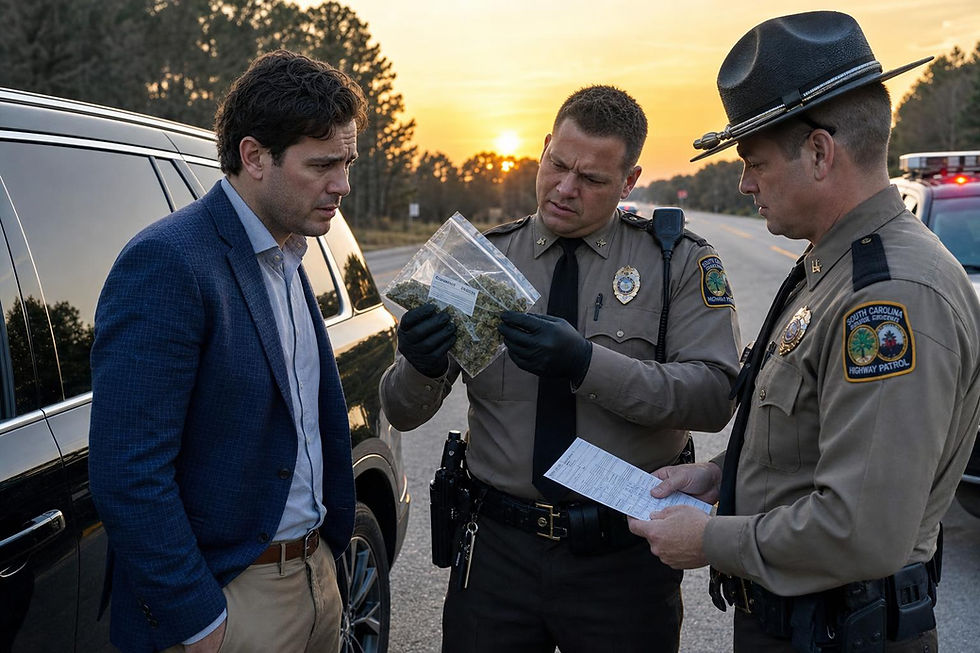
WASHINGTON, D.C. — With 108 days remaining before America’s new federal hemp definition takes effect, the United States government has begun preparing to classify cannabis seeds according to the crimes they may commit after receiving water, soil and access to sunlight.
The initiative, informally known as the Federal Bureau of Pre-Crime Seeds, will allow regulators to identify dangerous cannabis genetics before the suspect has germinated, developed roots, produced cannabinoids or done anything more threatening than rattle around inside a paper envelope.
Beginning November 12, 2026, federal law will exclude from the definition of legal hemp any viable seed originating from a cannabis plant that exceeded 0.3 percent total THC, including THCA. The provision was enacted inside the FY2026 appropriations package signed by President Donald Trump on November 12, 2025, and becomes effective exactly one year later.
The seed itself does not need to contain intoxicating amounts of THC. It does not need to contain measurable THC at all. Its legal status can instead depend on the plant from which it came, effectively replacing chemical analysis with botanical ancestry and giving federal cannabis policy the same evidentiary standards as a medieval blood feud.
At last, America has achieved what decades of drug enforcement could not: arresting weed before there is weed.
A Controlled Substance Without Much Substance
Cannabis seeds naturally contain neither THC nor CBD, according to the Food and Drug Administration. Trace cannabinoids can appear on their surfaces through contact with resin or other plant material during harvesting and processing, but the seed itself is not a tiny edible packed with enough THC to make a field mouse reconsider its career.
That inconvenient scientific detail briefly mattered under the 2018 Farm Bill. Congress defined hemp according to the delta-9 THC concentration of the plant or plant part being evaluated, including seeds. In January 2022, the Drug Enforcement Administration confirmed in a letter to attorney Shane Pennington that a cannabis seed containing no more than 0.3 percent delta-9 THC qualified as hemp and was not controlled under the Controlled Substances Act, regardless of the THC concentration the resulting plant might eventually produce.
For approximately four years, federal cannabis policy accidentally followed a recognizable principle of law: an object should be judged according to what it actually is.
Congress has now corrected that oversight.
Under the new definition, a viable seed can lose federal hemp status because its parent plant exceeded the THC threshold. It is no longer enough for the seed to be sober. Its family must be sober. The federal government has replaced product testing with genealogical suspicion and established that cannabinoid criminality may be transmitted through the bloodline, like hemophilia or membership in the British royal family.
Federal agents will no longer need to wait for probable cause. Probable chlorophyll will suffice.
Welcome to the Department of Pre-Crime Botany
The new system introduces a bold regulatory question: how does the government determine the THC history of a seed’s parent plant after the seed has been harvested, packaged, transported, resold and separated from every biological witness capable of testifying?
The statute does not provide a practical answer. It simply provides the conclusion, which is Washington’s favorite substitute.
Seed sellers could theoretically maintain parent-plant testing records, production histories, genetic documentation and chain-of-custody information for every seed lot. Those records would then need to survive wholesalers, breeders, distributors, collectors, online marketplaces and the informal seed exchanges that have preserved cannabis genetics for decades while federal lawmakers were still pretending CBD was a gateway drug to jazz.
A seed without sufficient paperwork may become a seed of interest.
To reduce administrative confusion, the imaginary Bureau of Pre-Crime Seeds is expected to introduce Form 420-PB, the Pre-Bloom Character Affidavit. Applicants will certify that each seed has displayed no signs of future intoxicating behavior, including aggressive taproot development, unauthorized terpene intent or association with cultivars known to exceed the moral potency limit.
Seeds unable to demonstrate compliant parentage may be referred to the Botanical Threat Assessment Division, where officers will examine shell coloration, size, striping and general demeanor before reaching the only conclusion available from looking at a seed: it is a fucking seed.
Mitch McConnell Invents Hemp, Then Calls the Police
The seed provision arrived as part of a broader effort led by Kentucky Senator Mitch McConnell to narrow the federal definition of hemp and eliminate intoxicating hemp products.
McConnell was instrumental in legalizing hemp through the 2018 Farm Bill, an achievement he promoted as a new agricultural opportunity for Kentucky farmers. By 2025, he was arguing that companies had exploited the law’s definition to manufacture intoxicating products and market them through gas stations, convenience stores and candy-like packaging. He helped secure the new restrictions inside the federal spending package.
There is a defensible policy debate hiding somewhere beneath this mess. Hemp-derived THC products did spread faster than meaningful federal standards for age restrictions, manufacturing, testing, dosage and labeling. Plenty of companies looked at regulatory ambiguity and responded by stuffing delta-8 into gummy bears shaped like cartoon fruit, because apparently every legal loophole in America must eventually become a product sold beside the male-enhancement pills.
Congress could have regulated those products.
Instead, it rewrote the definition of hemp broadly enough to threaten nonintoxicating CBD products, low-dose beverages and viable cannabis seeds, then declared industrial hemp protected because rope remains the only cannabis product Washington can contemplate without reaching for a firearm.
McConnell spent years presenting himself as the father of American hemp. He has now returned to the family reunion carrying a warrant for the children.
The federal government created an entire consumer market through sloppy statutory language, watched businesses build around it, refused to establish a coherent regulatory framework and then decided the cleanest solution was to criminalize the inventory one year later.
That is not closing a loophole. That is setting fire to the building because Congress forgot to install a door.
Guilt by Parent Plant
The provision’s treatment of seeds is especially deranged because cannabis genetics do not behave like federally registered widgets rolling off an assembly line.
Environmental conditions affect cannabinoid expression. Cultivation methods, stress, light intensity, harvest timing and phenotype variation can influence the final chemistry of a plant. Two seeds from the same genetic line do not necessarily become chemically identical adults, which is one reason cultivators hunt phenotypes rather than planting a thousand seeds and expecting a thousand photocopies.
Sergio Martínez, founder and CEO of Blimburn Seeds, told The Guardian that cannabis seeds generally appear indistinguishable until they are grown and observed over several months. He questioned how businesses could reliably establish which seeds would remain legally compliant and warned that the new system could drive the American seed market underground.
That uncertainty is not a flaw in the federal model. It is the model.
A seed does not need to be proven dangerous. It needs to lack proof that it will remain harmless under every possible future growing condition. The burden has been transferred from the government demonstrating illegal chemistry to the seed industry demonstrating lifelong botanical obedience from an object that has not yet opened.
This is the regulatory equivalent of denying a nursery license because one of the infants may eventually become a nightclub promoter.
The seed’s own conduct is irrelevant. The government wants to know where it came from, what its mother tested at and whether its descendants may one day develop resin glands without federal permission.
America has finally combined drug prohibition with hereditary punishment, creating a justice system in which an embryo can inherit its mother’s certificate of analysis.
The Only Innocent Seed Is a Dead Seed
Federal cannabis law has long maintained a special affection for sterilized seeds.
The Controlled Substances Act historically excluded sterilized cannabis seeds incapable of germination. A dead seed could be imported, processed, crushed for oil, baked into food or otherwise handled without raising the same narcotics concerns as a living seed capable of becoming a plant.
The new hemp language continues that philosophical tradition by specifically targeting viable seeds. Viability is the aggravating factor. Life itself creates the risk.
A seed that cannot grow is commercially acceptable.
A seed that can grow requires a background check.
The safest compliance procedure may therefore be execution. Seed companies could avoid future liability by sterilizing their genetics, destroying their breeding value and converting generations of cultivar development into bird food.
This is a familiar federal bargain. Cannabis may exist as rope, lotion, research material, an FDA-approved pharmaceutical or a dead seed in a protein bar. The trouble begins when it remains useful to ordinary people without passing through an institution large enough to invoice the government.
A living cannabis seed represents independence. It allows a patient, homegrower, breeder or small cultivator to reproduce the plant without purchasing finished products from a licensed corporation every week. It can preserve rare genetics, adapt a cultivar to a region and move biological ownership outside the vertically integrated supply chain.
Naturally, Washington finds this terrifying.
Rand Paul Requests Due Process for the Defendant
Kentucky Senator Rand Paul attempted to remove the hemp restrictions from the 2025 spending legislation, warning that the provision would devastate the industry and force the destruction of hemp seeds across the country. His amendment failed before the broader funding package was enacted.
On April 20, 2026, Paul introduced the bipartisan Hemp Safety Enforcement Act with Senators Amy Klobuchar and Joni Ernst. The bill would allow states and Tribal governments to regulate hemp and hemp-derived products under their own safety frameworks rather than allowing the upcoming federal restrictions to erase much of the market. The legislation remains an attempted escape hatch from a crackdown Congress already scheduled.
Paul’s proposal contains a dangerously radical idea: jurisdictions that have already developed age limits, testing requirements and product standards might be permitted to continue regulating commerce instead of watching Washington replace regulation with prohibition.
This approach lacks the elegant simplicity of declaring a seed criminal because its mother once tested at 18 percent THCA.
It would require lawmakers to distinguish between industrial hemp, nonintoxicating CBD, intoxicating cannabinoids, synthetic compounds, adult-use products, medical access and viable genetics. That sounds exhausting. Congress would need to understand the plant before legislating it, a standard so burdensome that half the Senate would need medical leave.
Pre-crime is faster.
The Genetic Public Defender Shortage
The seed restrictions will not fall evenly across the cannabis industry.
Large licensed cultivators operating inside state markets already maintain controlled facilities, tracked inventories and internal genetic libraries. Small breeders, seed banks, homegrowers and medical patients are more dependent on the ability to purchase, preserve and ship viable genetics across jurisdictions.
Jamie Pearson, president and founder of cannabis consultancy New Holland Group, warned that the restrictions could push valuable genetics underground and leave only larger, better-resourced businesses capable of navigating whatever licensing and documentation requirements emerge. She compared the potential loss of cannabis diversity to replacing a broad wine culture with a handful of mass-market producers.
That is how compliance theater becomes market consolidation.
First, the government creates an impossible evidentiary burden. Then it acts surprised when only corporations with legal departments can meet it. Finally, executives describe the resulting concentration as maturation, because saying “the law strangled everyone smaller than us” sounds bad on an investor call.
The breeders who preserved cannabis genetics through prohibition will again become criminals. The people who built the plant’s modern diversity while federal agencies were raiding gardens will be told they lack the documentation necessary to continue possessing the biological material they created.
Meanwhile, the companies best positioned to survive will publish sustainability reports about genetic stewardship and take photographs of executives standing beside plants their attorneys would never allow them to touch.
FDA Has Not Finished the Dictionary
The law also directed the FDA to publish, within 90 days of enactment, lists identifying naturally occurring cannabinoids, THC-class cannabinoids and other cannabinoids with similar effects, along with additional guidance defining what constitutes a product “container.”
As of May 28, 2026, the Congressional Research Service reported that the FDA had not published the required material.
That missed deadline is not directly necessary to determine whether a seed had a high-THC parent, but it provides useful context for the government’s implementation style. Congress wrote an enormously consequential definition, assigned agencies a crash course in cannabinoid taxonomy and then moved on to the next emergency spending package before anyone finished the vocabulary list.
Businesses are expected to restructure supply chains before November.
Federal agencies are still locating the glossary.
The law has an effective date, a criminal consequence and a measurable threshold. What it lacks is a practical method for tracing a loose cannabis seed back to a tested parent plant once that seed enters ordinary commerce.
That gap will eventually be filled by guidance, enforcement discretion, litigation or the traditional federal method of ruining several people’s lives until a court explains what Congress meant.
November 12, 2026: The Seed Becomes Evidence
The new definition takes effect on November 12, 2026. When it does, cannabis seeds that previously qualified as federally legal hemp may fall back within the Controlled Substances Act because of their lineage, even when the seeds themselves contain negligible THC. The Congressional Research Service has acknowledged uncertainty about how federal law enforcement will apply the new prohibitions.
That uncertainty is doing considerable work.
Seed sellers do not know what records will prove compliant parentage. Breeders do not know how much genetic history must accompany a seed. Consumers do not know whether previously purchased seeds will become contraband. Federal officials have not publicly produced a practical national system capable of separating legal and illegal seeds after they have been removed from their original plants.
The coming enforcement regime therefore depends on something more durable than science: fear.
Businesses will stop shipping because the rules are unclear. Payment processors will retreat. Carriers will refuse packages. Lawyers will recommend destroying inventory. Platforms will remove listings. Genetics will disappear from public commerce before a federal agent ever needs to inspect a seed.
That is the genius of regulatory ambiguity. The government does not have to conduct every raid when uncertainty can perform the raid for free.
The Bureau of Pre-Crime Seeds will not need a large budget. It only needs a statute vague enough to make everyone imagine the handcuffs.
Final Determination
America once judged cannabis seeds by their chemistry. That produced the intolerable result of legal objects remaining legal.
Congress has now restored order.
A seed may be punished for the cannabinoid concentration of the plant that produced it. A viable seed is more suspicious than a sterilized one because it possesses the means to become alive. A breeder may be expected to prove the future behavior of genetics that have not germinated. A patient may lose access to cultivars preserved specifically for medical use. Federal agencies may impose the rule before developing any coherent way to administer it.
The plant has not grown.
The THC does not exist.
The crime has not occurred.
Thank God the government got there in time.


Comments